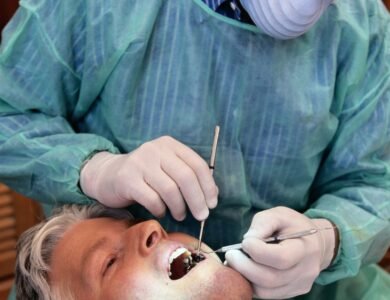
Scaling and Root Planing (Deep Cleaning): The Comprehensive Guide to Halting Gum Disease


Scaling and Root Planing (Deep Cleaning): The Comprehensive Guide to Halting Gum Disease
By HealthGuideAZ Medical Editorial Team
Medically Reviewed by Board-Certified Periodontists
When a patient visits the dentist after years of avoiding checkups and complains of bleeding gums, the solution is rarely a standard 30-minute polish. They usually require the cornerstone of non-surgical periodontal therapy: Scaling and Root Planing (SRP), commonly known as a “Deep Cleaning.”
According to the American Academy of Periodontology (AAP), nearly half of American adults over the age of 30 suffer from some form of periodontal disease. While a regular cleaning only removes soft plaque above the gumline, Scaling and Root Planing is a meticulous medical procedure designed to reach deep beneath the gums. It physically removes hardened, toxic tartar (calculus) from the tooth roots, effectively stopping the biological destruction of the jawbone.
If you have noticed chronic bad breath, red and swollen gums, or teeth that appear to be getting “longer,” understanding the mechanics of a deep cleaning, the necessity of local anesthesia, and the lifelong commitment to periodontal maintenance is your critical first step to saving your natural teeth from extraction.
Advanced Clinical Tool
Periodontal Risk & Deep Cleaning Diagnostic
Complete this clinical symptom audit evaluating your gum bleeding, recession, dental history, and systemic health to determine if you require Standard Prophylaxis, Scaling & Root Planing, or advanced surgical intervention.
⚠️ CLINICAL ALGORITHM ONLY: This tool evaluates symptoms of subgingival calculus and bone loss. It holds no medical diagnostic validity. Periodontal disease can only be accurately diagnosed via physical probing and X-rays by a licensed Dentist or Dental Hygienist.
Loading engine...
Powered by Health Guide AZ Periodontal Algorithms
Comparative Table: Standard Cleaning vs. Deep Cleaning (SRP)
| Clinical Aspect | Standard Prophylaxis (Regular Cleaning) | Scaling & Root Planing (Deep Cleaning) |
|---|---|---|
| Target Area | Only the visible crowns of the teeth above the gumline. | Deep below the gumline, directly on the tooth roots. |
| Anesthesia Requirement | Not required. Completely painless. | Requires local numbing injections (lidocaine) for comfort. |
| Primary Goal | Preventative maintenance for a healthy mouth. | Active medical treatment to halt jawbone destruction. |
| Frequency | Every 6 months. | Done once to clear infection, followed by 3-month maintenance. |
10 Crucial Truths About Scaling and Root Planing
1. Calculus (Tartar) Cannot Be Brushed Away
When soft plaque sits on your teeth for more than 48 hours, the minerals in your saliva calcify it into a cement-like substance called calculus. Once it forms below the gums, it acts like a splinter in your skin. No amount of flossing will remove it; it must be physically scraped off by a hygienist’s metal instruments.
2. “Pockets” Are the Ultimate Enemy
Healthy gums cling tightly to teeth with a depth of 1 to 3 millimeters. As tartar builds up, it forces the gums to detach, creating deep “pockets” (4mm to 8mm+). Your toothbrush bristles only reach 2mm deep. Anything deeper becomes a stagnant, anaerobic incubator for bone-destroying bacteria.
3. The Two-Step Process
Because the procedure is intense, it is rarely done on the whole mouth at once. Dentists usually numb and clean the right side of your mouth in one visit, and the left side in a second visit a week later, so you always have one comfortable side to chew on during recovery.
4. Root “Planing” Allows Reattachment
Scaling removes the large chunks of tartar. Planing is the delicate process of smoothing the microscopic rough spots on the root surface. Gums will not reattach to a rough, bacteria-covered root. A glassy, smooth root allows the gum tissue to heal tightly against the tooth again.
5. Your Teeth Might Feel Temporary Sensitivity
A thick layer of tartar actually acts like a toxic “blanket” insulating the tooth roots. Once the dentist removes it, the naked roots are suddenly exposed to cold water and air. Severe thermal sensitivity is common for a few weeks post-op and is managed with Potassium Nitrate (Sensodyne) toothpaste.
6. Teeth May Feel Slightly Looser at First
If you have severe tartar, the tartar itself might be splinting your teeth together. After it is removed, your teeth may feel slightly loose. Do not panic. As the massive inflammation in the gums subsides over the next month, the tissue shrinks, tightens, and firms the teeth back up.
7. The Use of Antimicrobial Chips (Arestin)
To maximize healing, many hygienists place localized antibiotics (like Arestin or Atridox) directly into the deep pockets after scraping them clean. These microspheres slowly release powerful bacteria-killing medicine over 14 days, drastically improving pocket shrinkage.
8. It Reverses Halitosis (Chronic Bad Breath)
Over-the-counter mouthwashes only mask bad breath for 30 minutes. True chronic halitosis is caused by Volatile Sulfur Compounds (VSCs) excreted by the bacteria rotting the blood and tissue in your gum pockets. SRP physically removes the source, curing the odor permanently.
9. You Can Never Go Back to a “Regular” Cleaning
Once you are diagnosed with Periodontal Disease, the 6-month cleaning is obsolete for you. Because periodontal bacteria aggressively repopulate deep pockets in exactly 90 days, you must commit to “Periodontal Maintenance” visits every 3 to 4 months for the rest of your life.
10. It Will Not Regenerate Lost Bone
Scaling and Root Planing is highly successful at stopping active bone loss and shrinking gum pockets. However, it cannot grow back the jawbone you have already lost. If bone loss is severe, advanced surgical grafting or LANAP laser therapy will be required.
Real Success Cases: Saving the Foundation
Case 1: The Bloody Brushing
The Scenario: A 35-year-old male had not visited the dentist in 5 years. He complained that his gums were bright red and bled heavily into the sink every time he brushed. Clinical probing revealed generalized 5mm pockets full of hardened calculus.
The Solution: A full-mouth Scaling and Root Planing session divided into two visits, paired with ultrasonic scaling to vibrate the heavy tartar off the roots under local anesthesia.
The Result: At the 4-week re-evaluation, the bleeding had stopped completely. The inflammation subsided, and the 5mm pockets shrank to a healthy, maintainable 3mm. He avoided irreversible bone destruction by catching it early.
Case 2: The Diabetic Complication
The Scenario: A 52-year-old female with Type 2 Diabetes struggled to control her blood sugar. Her dentist noted a rapid increase in bone loss and deep 6mm pockets around her molars. The systemic inflammation from the gum disease was elevating her HbA1c levels.
The Solution: SRP combined with Localized Antibiotics (Arestin). The hygienist deeply cleaned the roots and placed antibiotic microspheres directly into the 6mm pockets to combat her impaired diabetic healing response.
The Result: Three months later, not only had her gum pockets reduced to 4mm, but her primary care physician noted a significant, positive drop in her blood sugar levels due to the removal of the massive chronic infection in her mouth.
Curiosity & Golden Tip
Did You Know? (Fossilized Bacteria)
Dental calculus (tartar) is essentially a bacterial graveyard.
The Phenomenon: As millions of bacteria in plaque die, they calcify and petrify onto the tooth root, creating a highly porous, coral reef-like structure. This porous, fossilized rock then absorbs the toxins and acids excreted by the living bacteria layered on top of it, holding those toxins directly against your jawbone 24/7.
Golden Tip: The Warm Saltwater Miracle
How you manage your mouth in the first 72 hours dictates how fast your gums heal.
The Rule: Do not use harsh, alcohol-based mouthwashes (like original Listerine) immediately after a deep cleaning. The alcohol will burn the raw, healing tissue. Instead, dissolve half a teaspoon of sea salt into a glass of warm water and rinse gently 3 times a day. The hypertonic saltwater naturally draws out swelling, kills bacteria, and aggressively speeds up gum reattachment.
10 Frequently Asked Questions (FAQ) – Deep Cleanings
1. Will a deep cleaning hurt?
2. How much does Scaling and Root Planing cost?
3. Can I eat right after the procedure?
4. Is a deep cleaning a scam if I brush twice a day?
5. Why do they use an Ultrasonic machine making that high-pitched sound?
6. Can I get all four quadrants done on the same day?
7. What is the difference between SRP and Laser Therapy (LANAP)?
8. Will my teeth look cleaner and whiter?
9. What happens if I refuse the deep cleaning?
10. Can I still get cavities if I have gum disease?
Safety: Hygienist vs. Periodontist
For early to moderate periodontitis (pockets measuring 4mm to 6mm), a highly trained Dental Hygienist operating under a general dentist is fully equipped to perform excellent Scaling and Root Planing. However, if your pockets measure 7mm or deeper, or if your teeth are noticeably loose, non-surgical cleaning will not be enough to save them. You must ask for a referral to a Board-Certified Periodontist to evaluate the need for gum surgery or laser regeneration.
Legal & Safety Disclaimer: HealthGuideAZ.com provides strictly educational content. Periodontal instrumentation releases large amounts of oral bacteria briefly into the bloodstream. If you have a history of heart valve replacements, endocarditis, or artificial joint replacements, you MUST inform your dentist. You will likely require a prophylactic dose of antibiotics one hour before your deep cleaning to prevent a systemic, life-threatening infection.
Search Keywords for Your Research
scaling and root planing, deep dental cleaning, periodontal disease treatment, gum disease reversal, bleeding gums treatment, tartar removal below gumline, dental calculus removal, periodontitis deep cleaning, standard cleaning vs deep cleaning, root planing sensitivity, curettage dental procedure, non surgical periodontal therapy, bad breath halitosis treatment, receding gums periodontitis, ultrasonic scaler deep cleaning, deep pocket dental cleaning, dental deep cleaning cost, periodontal maintenance schedule, local anesthesia deep cleaning, swollen gums treatment, loose teeth periodontitis, diabetic gum disease, heart disease and gum health, laser assisted scaling, board certified periodontist
3D CBCT Scanning & Digital Impressions: The Future of Precision Dentistry
Clear Aligner Therapy: The Comprehensive Guide to Invisible Orthodontics
Zirconia and E.max Dental Crowns: The Ultimate Guide to Restorative Strength and Aesthetics
All-on-4 & All-on-6 Full Arch Rehabilitation: The Definitive Guide
Dental Care & Oral Rehabilitation: The Comprehensive Guide to Smile Restoration
Top 200 Cities Worldwide for Healthcare & Medical Tourism
⚠️ LIABILITY WAIVER AND CLINICAL WARNING: This tool is strictly an algorithmic and educational simulation. It holds no diagnostic validity. Dental surgery involves placing titanium structures in the jawbone and altering permanent tooth structure. We disclaim any civil, medical, financial, or billing liabilities tied to its use. An online simulation cannot evaluate true bone density (via CBCT scan), active periodontal disease, or nerve mapping. Strictly consult a Board-Certified Dentist or Prosthodontist for a comprehensive physical evaluation.
1. What is your primary dental concern right now?