Sedation Dentistry (Sleep Dentistry): The Comprehensive Guide to Fear-Free Procedures

Sedation Dentistry (Sleep Dentistry): The Comprehensive Guide to Fear-Free Procedures
By HealthGuideAZ Medical Editorial Team
Medically Reviewed by Board-Certified Dental Anesthesiologists and Oral Surgeons
For millions of people, the sound of a dental drill or the sight of a needle triggers debilitating panic. Severe dentophobia prevents countless patients from seeking routine care, allowing minor cavities to evolve into massive, life-threatening infections. Sedation Dentistry, often marketed as “Sleep Dentistry,” bridges this gap by utilizing advanced pharmacology to completely eliminate anxiety, pain, and memory of the procedure.
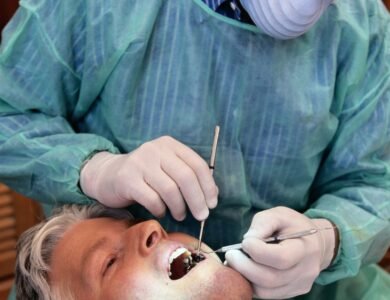
According to the American Dental Association (ADA), sedation protocols range from mild anxiolysis (Nitrous Oxide) to moderate enteral sedation (oral pills) and deep parenteral sedation (IV administration). Beyond just managing fear, these pharmacological tools allow oral surgeons to perform highly complex, multi-hour procedures—such as placing six dental implants or extracting four impacted wisdom teeth—while the patient remains profoundly relaxed and physically cooperative.
Whether you suffer from a hyperactive gag reflex, possess a genetic resistance to standard local anesthetics, or are simply paralyzed by clinical anxiety, mastering the physiological differences between conscious sedation and deep IV therapy is your essential first step toward reclaiming your oral health without psychological trauma.
Advanced Clinical Tool
Dental Anxiety & Sedation Modality Evaluator
Complete this clinical diagnostic evaluating your phobia triggers, gag reflex intensity, systemic airway health, and procedural complexity to determine your optimal and safest pharmacological sedation protocol.
⚠️ PHARMACOLOGICAL ALGORITHM ONLY: This tool analyzes psychological fear, gag reflex, and systemic airway metrics to suggest anxiolytic pathways. It holds zero medical diagnostic validity. Safe anesthesia requires full medical clearance and EKG tracking by a licensed Anesthesiologist or Oral Surgeon.
Loading engine...
Powered by Health Guide AZ Anesthesiology Algorithms
Comparative Table: The Spectrum of Dental Sedation
| Sedation Modality | Administration Method | Clinical Effect & Recovery |
|---|---|---|
| Minimal: Nitrous Oxide | Inhaled gas through a nasal mask (Laughing Gas). | Takes the edge off. You are fully awake. Leaves the system instantly; you can drive home. |
| Moderate: Oral Sedation | Prescription pill (Triazolam/Halcion) taken 1 hour before. | Profoundly relaxed and drowsy. Creates amnesia. You MUST have an escort drive you home. |
| Deep: IV Sedation | Medication delivered intravenously into the bloodstream. | You are asleep but breathing on your own. Total amnesia. Requires strict fasting and a driver. |
| General Anesthesia | Hospital-grade IV drugs with an endotracheal breathing tube. | Completely unconscious. Used only for extreme phobias, special needs, or massive jaw reconstruction. |
10 Crucial Truths About Sedation Dentistry
1. “Sleep Dentistry” is Often a Misnomer
Unless you are under General Anesthesia with a breathing tube, you are not truly “unconscious.” During Oral and IV Sedation, you are actually in a state of deep, twilight relaxation. You can still respond to verbal commands (like “open wider”), but you will feel no anxiety and have zero memory of doing so.
2. The Phenomenon of Anterograde Amnesia
The most powerful benefit of Oral and IV Sedation (which typically utilize Benzodiazepines like Midazolam) is profound amnesia. The drugs temporarily block your brain’s ability to form new short-term memories. You will sit in the chair, blink, and suddenly the multi-hour surgery will be completely over in what feels like one second.
3. You Still Receive Numbing Injections
Sedation drugs manage fear and awareness, but they do not paralyze local pain receptors. The dentist must still inject local anesthesia (Lidocaine) into your gums to numb the tooth. The massive advantage is that these injections are given after you are completely sedated, meaning you will never see the needle or feel the pinch.
4. The Strict NPO (Fasting) Rule
If you are receiving Oral or IV sedation, you are strictly forbidden from eating or drinking anything for 8 hours before the procedure (NPO). Because sedatives relax your airway reflexes, having a full stomach carries a lethal risk of aspirating stomach contents into your lungs. Never lie to your anesthesiologist about fasting.
5. It Suppresses the Gag Reflex
Some patients are physically unable to tolerate dental tools or X-ray sensors in their mouths due to a hyperactive, violent gag reflex. Sedatives severely depress this autonomic nervous response, allowing the dentist to work efficiently in the very back of the throat without triggering nausea.
6. IV Sedation is the Ultimate Gold Standard
While oral pills are effective, they rely on your stomach’s unpredictable digestion rate. IV Sedation delivers medication directly into the bloodstream, allowing the doctor to titrate (adjust) the exact dosage minute-by-minute. If you need to be deeper asleep, the effect is instantaneous. If you need to wake up, reversal drugs act in seconds.
7. Overcoming “Novocaine Resistance”
Some patients possess rare genetic anomalies (often linked to red hair) or severe anxiety that causes them to metabolize local anesthesia too fast, meaning they are impossible to fully numb. Sedation lowers the central nervous system’s adrenaline output, allowing the local numbing agents to finally work effectively.
8. Extensive Electronic Monitoring is Mandatory
During IV sedation, the surgical suite operates identically to a hospital operating room. You are connected to an EKG to monitor your heart rhythm, a pulse oximeter for blood oxygen levels, an automated blood pressure cuff, and often capnography to measure every breath of carbon dioxide you exhale.
9. The Escort Rule is Non-Negotiable
If you take a sedative pill or receive an IV, you are legally impaired. You cannot drive, take an Uber alone, or make major legal decisions for 24 hours. A responsible adult must physically walk into the clinic, receive your post-op instructions, drive you home, and monitor you for the rest of the day.
10. Sleep Apnea is a High-Risk Variable
If you suffer from Obstructive Sleep Apnea, you are at a significantly higher risk for airway collapse during deep sedation. You must disclose this, along with your BMI and neck size, to the anesthesiologist. Advanced practitioners will often use specialized airway devices or adjust the drug cocktail to keep your breathing stable.
Real Success Cases: Engineering Comfort
Case 1: The Severe Phobic’s Root Canal
The Scenario: A 32-year-old female suffered from extreme dentophobia due to a traumatic childhood dental experience. She developed a massive, throbbing abscess on a molar but suffered panic attacks and hyperventilation just walking into a dental lobby.
The Solution: Oral Conscious Sedation. Her dentist prescribed a low-dose anti-anxiety pill to take the night before to ensure she slept, and a stronger dose (Triazolam) to take one hour before her appointment.
The Result: Her husband guided her into the chair while she was profoundly drowsy and relaxed. The Endodontist performed a flawless, pain-free root canal. She woke up at home later that afternoon with zero memory of the sounds, smells, or vibrations of the procedure.
Case 2: The Marathon Surgery
The Scenario: A 55-year-old male required a massive full-mouth reconstruction. The treatment plan dictated the extraction of 12 failing teeth, bilateral sinus lifts, and the placement of 8 titanium dental implants in a single surgical session.
The Solution: Deep IV Sedation. Expecting the surgery to last over four hours, the Oral Surgeon secured an IV line, administering a precise, continuous drip of Propofol, Fentanyl, and Versed to keep the patient in a deep, pain-free twilight sleep.
The Result: Attempting this surgery awake would have been physically and mentally agonizing. Under IV sedation, the surgeon worked with absolute precision on a completely still patient. The patient perceived the grueling 4-hour surgery as lasting only five minutes.
Curiosity & Golden Tip
Did You Know? (The Redhead Gene Anomaly)
Having red hair actually changes how you process pain and anesthesia.
The Phenomenon: Scientific studies confirm that people with red hair possess a mutation in the MC1R gene. This specific genetic anomaly makes redheads highly resistant to subcutaneous local anesthetics (like Lidocaine) and requires up to 20% more general anesthesia to achieve sedation. If you are a redhead and struggle to get numb, you aren’t crazy—it is a proven biological fact, making you a prime candidate for supplemental sedation!
Golden Tip: Do Not Skip Your Daily Meds
Fasting for IV sedation does not mean skipping vital medications.
The Rule: While you must stop eating 8 hours before surgery, if you take daily medications for high blood pressure, thyroid issues, or heart conditions, you should almost always take them at your normal time with a tiny, microscopic sip of water. Skipping blood pressure pills before a stressful surgery can cause a dangerous hypertensive spike. Always verify exactly which daily pills to take with your anesthesiologist the week before.
10 Frequently Asked Questions (FAQ) – Sedation Dentistry
1. Is IV sedation safe?
2. Can I get sedation just for a routine cleaning?
3. How fast does Laughing Gas (Nitrous Oxide) wear off?
4. Will I talk and say embarrassing things while sedated?
5. Does dental insurance cover the cost of IV Sedation?
6. How much does IV Sedation cost?
7. Can I request to be completely “put under” (General Anesthesia)?
8. What happens if I wake up during the surgery?
9. Are there side effects the day after sedation?
10. Can children be safely sedated for dental work?
Safety: The Credentials of the Provider
Not all dentists are legally permitted to administer sedation. Utilizing Nitrous Oxide requires a basic permit, but administering IV Sedation requires rigorous post-graduate medical training. Ensure your provider holds a specific “Parenteral Conscious Sedation Permit” issued by the state dental board. For complex cases involving high BMI, sleep apnea, or heart conditions, elite surgical clinics will often hire an independent Certified Registered Nurse Anesthetist (CRNA) or a Medical Anesthesiologist to solely manage your breathing while the surgeon focuses on your teeth.
Legal & Safety Disclaimer: HealthGuideAZ.com provides strictly educational content. Sedation depresses the central nervous system and respiratory drive. Never consume alcohol, recreational drugs, or unapproved prescription sedatives in the 48 hours prior to an official sedation appointment, as the compounding chemical effect can result in fatal respiratory arrest.
Search Keywords for Your Research
sedation dentistry near me, sleep dentistry cost, IV sedation dental implants, laughing gas nitrous oxide dentist, oral conscious sedation pills, triazolam halcion dental anxiety, dentophobia treatment, severe gag reflex dentist, general anesthesia wisdom teeth, twilight sedation oral surgery, dental anesthesiologist, safe dental sedation for children, fast numbing resistance redheads, NPO fasting rules surgery, anterograde amnesia midazolam, capnography pulse oximetry dental, sleep apnea sedation risk, dental anxiety management, pain free root canal, CRNA dental clinic, dental phobia solutions, IV sedation recovery time, dental sedation driver rules, special needs dentistry sedation, oral maxillofacial surgeon anesthesia
3D CBCT Scanning & Digital Impressions: The Future of Precision Dentistry
Clear Aligner Therapy: The Comprehensive Guide to Invisible Orthodontics
Zirconia and E.max Dental Crowns: The Ultimate Guide to Restorative Strength and Aesthetics
All-on-4 & All-on-6 Full Arch Rehabilitation: The Definitive Guide
Dental Care & Oral Rehabilitation: The Comprehensive Guide to Smile Restoration
Top 200 Cities Worldwide for Healthcare & Medical Tourism
⚠️ LIABILITY WAIVER AND CLINICAL WARNING: This tool is strictly an algorithmic and educational simulation. It holds no diagnostic validity. Dental surgery involves placing titanium structures in the jawbone and altering permanent tooth structure. We disclaim any civil, medical, financial, or billing liabilities tied to its use. An online simulation cannot evaluate true bone density (via CBCT scan), active periodontal disease, or nerve mapping. Strictly consult a Board-Certified Dentist or Prosthodontist for a comprehensive physical evaluation.
1. What is your primary dental concern right now?